Toolbox Chaos practical guide
Scientific Interpretation and Evidence Boundaries
Translate Toolbox Chaos plots and finite computations into precise statements, design corroborating checks, and avoid claims the GUI cannot establish.
Objective
What you will accomplish
Match the strength of every conclusion to the scope of the numerical evidence that directly supports it.
Before you begin
- Keep the complete model and numerical contract for every result under interpretation.
- Separate direct observations, numerical inferences, theoretical claims, and external validation.
Reference outputs
What these views can show
Procedure
Step-by-step workflow
-
Name the direct output
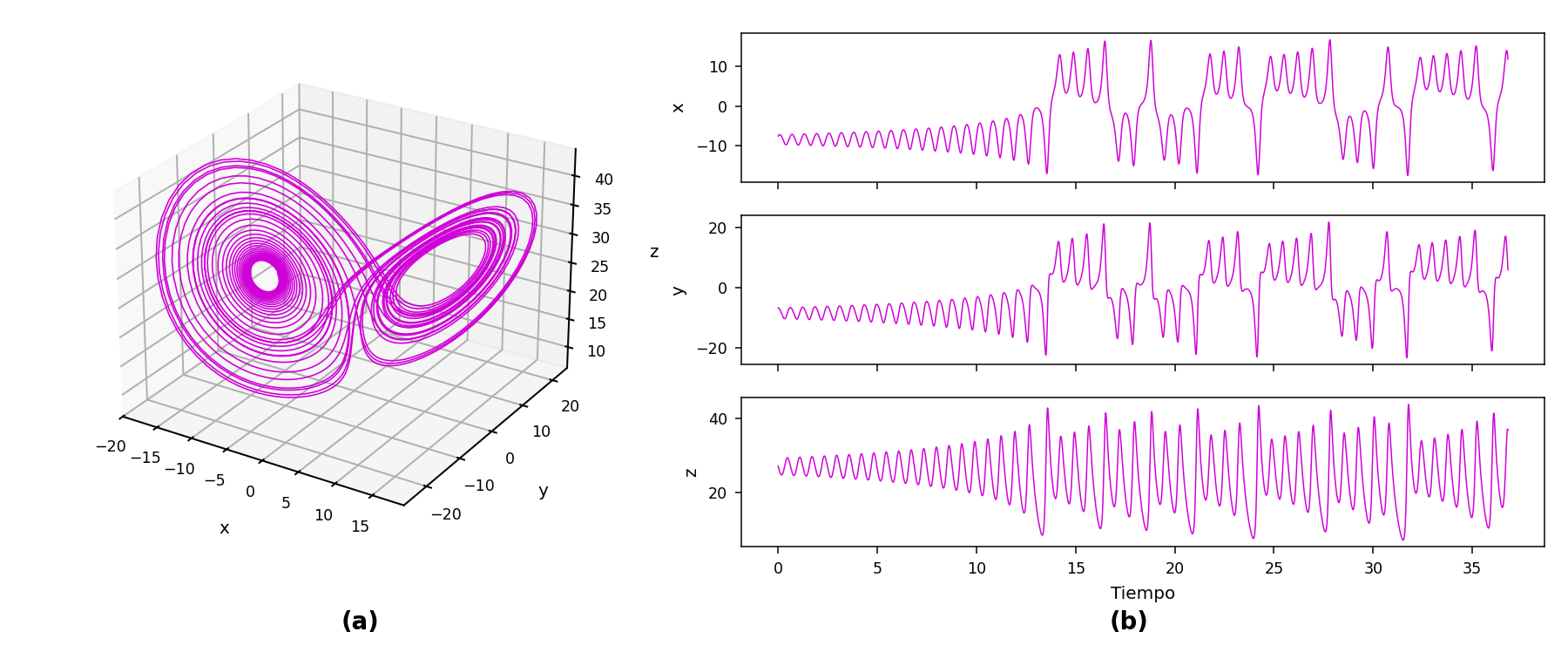
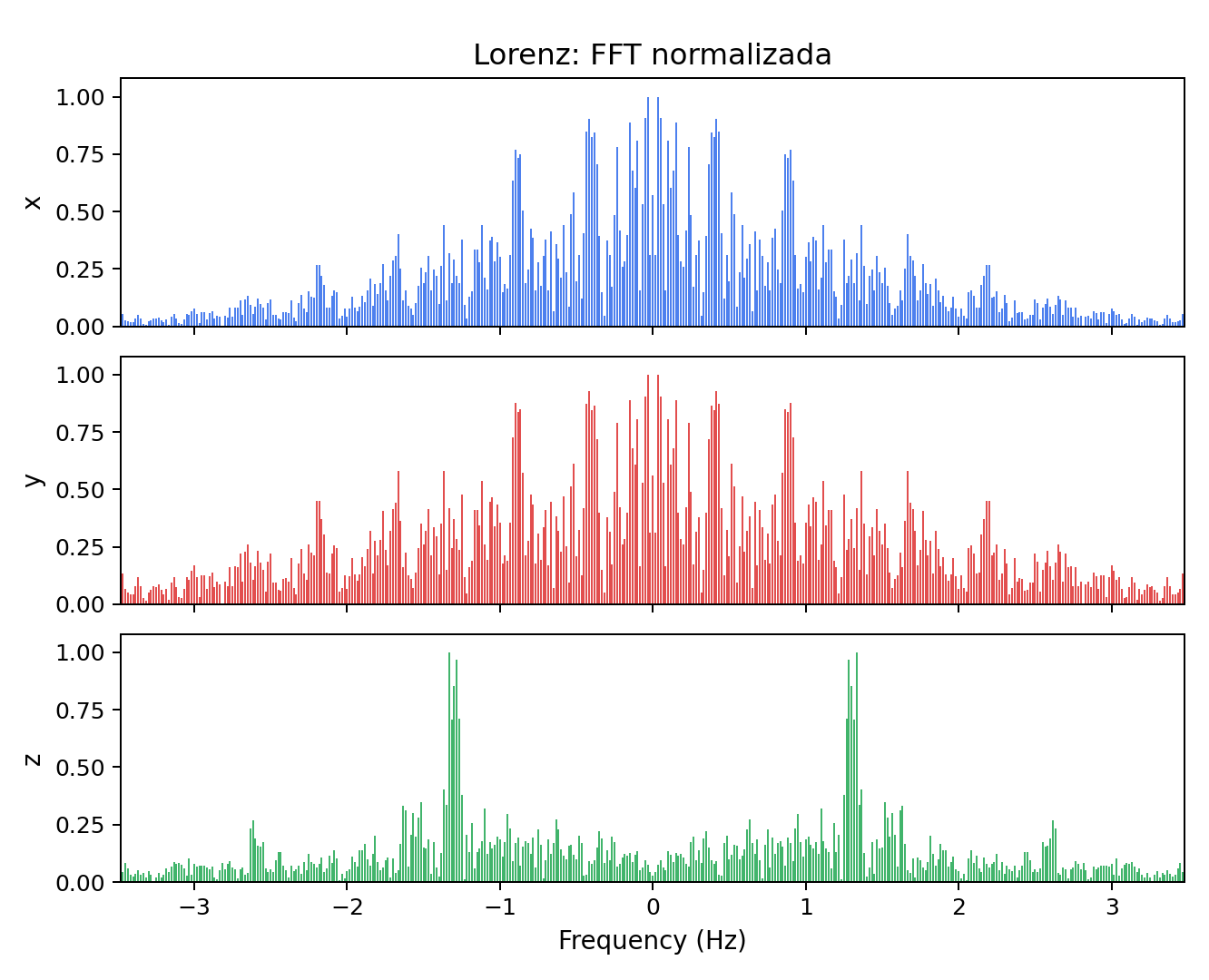
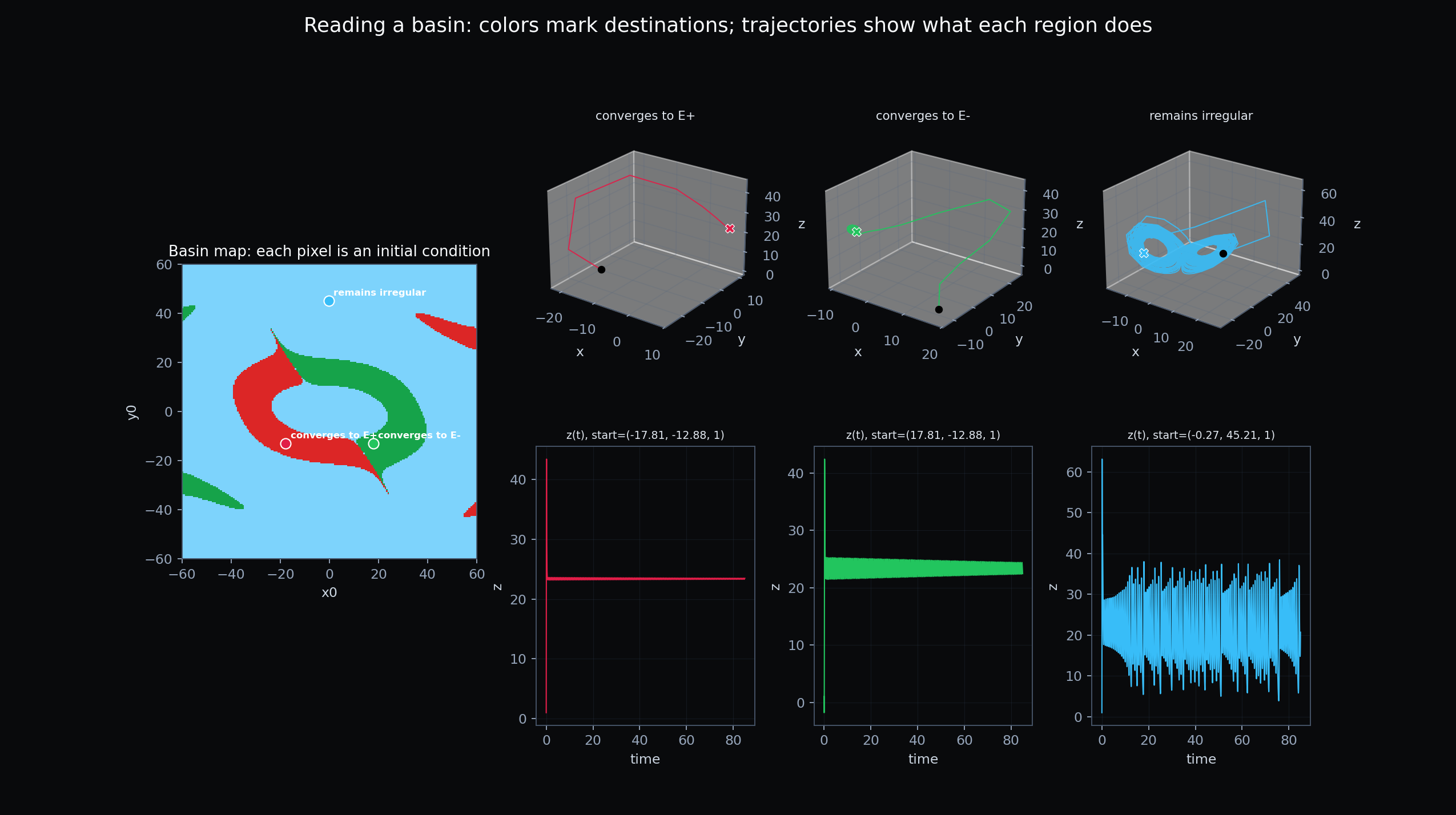
Begin with the artifact: finite trajectory, pairwise projection, time series, method overlay, Welch PSD, amplitude spectrum, finite-time Lyapunov estimate, equilibrium spectrum, parameter sweep, or finite basin grid.
State system, parameters, initial state, method, resolution, and observation window before describing the pattern.
-
Write the narrow observation
Use language such as ‘the computed trajectory remained bounded over T,’ ‘the PSD contains a dominant peak near f,’ or ‘two sampled starts reached different classified destinations.’
Avoid replacing the finite observation with an asymptotic or global noun unless separate evidence establishes it.
-
List alternative explanations
Consider transient behavior, coarse integration, insufficient sampling, projection overlap, aliasing, classifier tolerance, finite grid resolution, and unsupported model type.
For custom systems, also consider transcription errors and differences from the cited equations.
-
Choose corroborating checks
Use step refinement, longer horizons, nearby initial states, complementary plots, an appropriate diagnostic, and independent implementations when the claim warrants them.
Match the check to the risk: a spectral claim needs sampling and window checks; a basin claim needs grid, horizon, and classifier checks.
-
State the boundary
Report the tested region, resolution, horizon, model compatibility, and any unresolved cases. Do not hide conditionality in a footnote.
If the required claim is beyond the GUI, say which separate mathematical, experimental, or computational analysis is still needed.
-
Preserve provenance
Link the statement to the exported figure, run identifier, settings record, and any external verification.
Keep GUI evidence and external engine results as separate artifacts even when they appear in the same paper.
Evidence language by output
- Trajectory: ‘remained finite and visited this region over the simulated interval,’ not ‘proves a global attractor.’
- Spectrum: ‘contains these peaks or broadband components under this window,’ not ‘proves chaos.’
- Lyapunov: ‘finite-time estimate under this method and horizon,’ not ‘exact asymptotic invariant.’
- Equilibria/eigenvalues: ‘local linear classification at these points,’ not ‘complete global dynamics.’
- Bifurcation diagram: ‘sampled response over this parameter grid,’ not ‘complete bifurcation set.’
- Basin map: ‘classified sampled initial states on this plane,’ not ‘global basin topology.’
- Coexistence: ‘sampled starts reached distinct registered destinations,’ not ‘exhaustive set of attractors.’
Strict product boundary
Toolbox Chaos is the graphical environment for catalog simulation, visualization, diagnostics, custom-model prototyping, and exploration of parameters and initial conditions. Hidden Attractors FO is a separate mathematical engine. Any localization, continuation, or certification claim about hidden attractors belongs exclusively to the Hidden Attractors FO methodology and evidence, even when a Toolbox Chaos figure is used for communication.
Result
Expected output
- A claim whose subject, tested domain, time horizon, resolution, and evidence source are explicit.
- A list of alternative explanations addressed and limitations that remain.
- Clear separation between Toolbox Chaos exploration and any external mathematical-engine result.
Interpretation
How to read it
Toolbox Chaos is strongest as a no-code environment for forming hypotheses, comparing controlled numerical experiments, visualizing state evolution, and documenting parameter exploration.
The most credible interpretation combines complementary outputs and resolution checks while retaining conditional language appropriate to finite computation.
Export
Reproducibility checklist
- Direct observation separated from inference.
- Numerical contract and tested domain stated next to the claim.
- At least one relevant resolution, horizon, or independent check.
- Limitations and unsupported global conclusions explicitly listed.
- External analysis identified by its own software, method, and evidence record.
Applications
Where this workflow helps
- Writing accurate figure captions, methods, results, and limitations sections.
- Reviewing student reports and research-group notebooks for overclaiming.
- Designing follow-up experiments when exploratory outputs disagree.
- Keeping GUI demonstrations, numerical evidence, and mathematical proof in their proper roles.
Limits
What it does not establish
- No finite plot automatically proves asymptotic behavior, global attraction, uniqueness, or structural stability.
- Finite-time Lyapunov signs, broadband spectra, or complex portraits are evidence, not standalone certification of chaos.
- Toolbox Chaos does not locate or certify hidden attractors. Hidden-attractor localization is exclusively a Hidden Attractors FO task and must be documented as a separate engine workflow.